
What Is a Halal Logo? How to Read Logos That Differ by Organization, and How to Check That One Is Genuine
Category: For visitors
Halal logos are issued by certification bodies; Japan has no single national logo
A halal logo is a symbol that a certification body allows products or businesses it has certified to use. The “Handbook for Exporting Halal and Kosher Food” (March 2026), published by the Ministry of Agriculture, Forestry and Fisheries (MAFF), says that in countries with many non-Muslim consumers, it is difficult for consumers to decide for themselves whether food is halal. Certification bodies therefore certify products and allow them to be sold with a halal logo, making it easier for Muslims to identify halal food.
Japan has no common halal logo set by the national government. In its FAQ, the Japan Halal Association says there are many certification bodies, including individuals, because Japan has no legal regulation of halal. The Japan Halal Foundation says, “Including organizations and individuals, the number is said to be around 200.” Logo designs also differ by organization.
| Item | In Japan |
|---|---|
| Logo issuers | Private certification bodies, including religious organizations, nonprofit organizations, and general incorporated associations |
| Single national logo | None |
| Certification standards | Differ by organization; no globally unified standard either (MAFF handbook) |
| Meaning of the logo | A sign that the issuing organization has certified something under its own standards |
It is also useful to understand that standards differ by organization. MAFF’s handbook says halal certification has no globally unified standard. Countries and regions differ in their approaches and practices, so certification bodies’ requirements also differ. Even logos bearing the same word “HALAL” may represent different standards depending on the issuer.
We cover the certification procedure itself in How to Get Halal Certification: The Steps from Application to Certificate, and Timeframes Given by Six Organizations. This article explains what to look for when you see a logo on a product or at a business.
The six main certification bodies in Japan and their logos
MAFF’s table “Japanese Halal Certification Bodies for Overseas Exports,” as of July 27, 2026, lists six main Japanese organizations recognized by overseas certification authorities.
These six organizations also appear in the list of recognized foreign certification bodies published by JAKIM (Department of Islamic Development Malaysia), the government body responsible for halal certification in Malaysia. The list took effect on August 21, 2026, and shows each body’s certification logo alongside its name and contact details. The logos below are reproduced from the Japan section of the list (pp. 26–28).
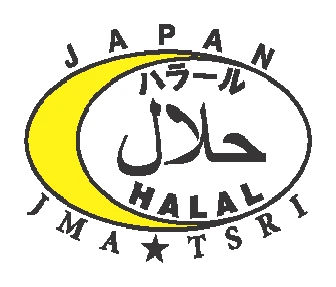
Japan Muslim Association (JMA)
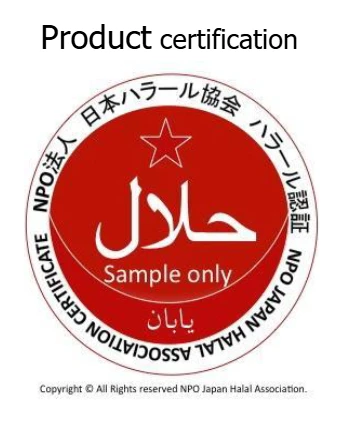
Japan Halal Association (JHA)
Product certification
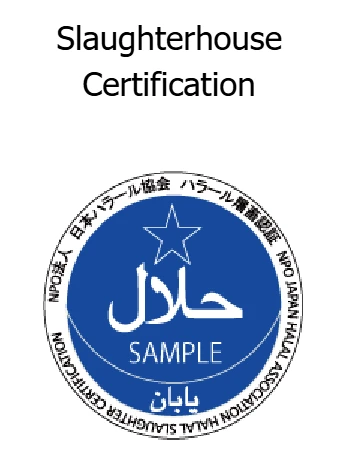
Japan Halal Association (JHA)
Slaughterhouse certification
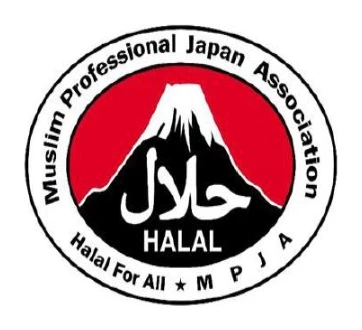
Muslim Professional Japan Association (MPJA)
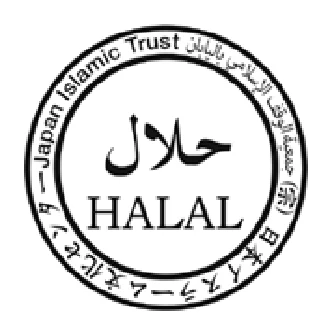
Japan Islamic Trust (JIT)
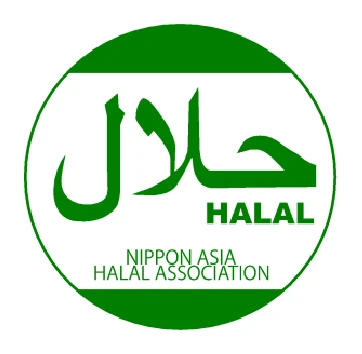
Nippon Asia Halal Association (NAHA)
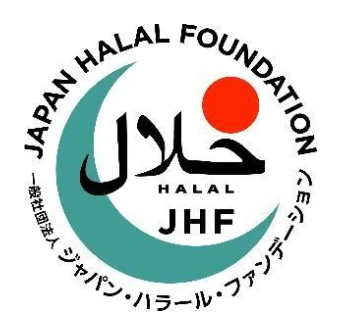
Japan Halal Foundation (JHF)
Logos reproduced from the “Halal Logo” column (pp. 26–28) of JAKIM’s “The Recognized Foreign Halal Certification Bodies & Authorities” (effective August 21, 2026), checked on October 25, 2026
| Organization | Abbreviation | Logo design (from JAKIM’s list) | Published information on certified products and other items (checked on October 15, 2026) |
|---|---|---|---|
| Japan Muslim Association | JMA | A yellow crescent, with Arabic script, “ハラール,” and “HALAL” in the center. “JAPAN” and “JMA★TSRI” appear around it. | No list found on its website’s halal certification page |
| Japan Halal Association | JHA | A red circle for product certification and a blue circle for slaughterhouse certification, each with a star and Arabic script in the center. The organization’s name in Japanese and English appears around it. | Publishes a “List of Certified Companies” |
| Muslim Professional Japan Association | MPJA | A black Mount Fuji on a red circle, with Arabic script and “HALAL.” The organization’s English name and “Halal For All” appear around it. | No list found from the homepage |
| Japan Islamic Trust | JIT | A circle outlined in black, with Arabic script and “HALAL.” The organization’s name in English, Japanese, and Arabic script appears around it. | Certification website has a “Certified Products” page |
| Nippon Asia Halal Association | NAHA | A green circle with Arabic script, “HALAL,” and the organization’s English name. | Publishes a “Halal Product List” |
| Japan Halal Foundation | JHF | A blue-green crescent and a red dot, with Arabic script, “HALAL,” and “JHF.” The organization’s name in English and katakana appears around it. | Products and restaurants listed under “Certification Record” |
The Japan Halal Association’s two logos carry the words “Sample only” and “SAMPLE,” which mark them as samples. Even a single body may use different logos depending on whether it certifies a product or a slaughterhouse. Each body controls the use of its own logo; this article reproduces the logos from JAKIM’s list to explain how to tell them apart.
Even if a body does not publish a list, the organization’s name on the logo can lead you to its contact details. We compare bodies with destination countries’ recognition lists in Is Japanese Halal Certification Recognized in Malaysia and Indonesia? Checking Those Countries’ Official Lists.
Other organizations beyond these six also issue logos. The Japan Halal Foundation’s FAQ says organizations with mutual recognition arrangements with overseas certification bodies can issue formal certification. It explains that “local halal” (ローカルハラール), valid only within Japan, may circulate domestically but cannot be exported overseas. A logo’s value changes with the extent of its issuer’s recognition.
Malaysian and Indonesian logos, and how to check certification
Foods made overseas may bear a logo from that country’s certification authority rather than a Japanese organization. Here, we look at Malaysia and Indonesia, which recognize Japanese bodies.
In Malaysia, JAKIM is responsible for halal certification and issuing halal logos. The Malaysian logo has an eight-pointed star inside a circle, with Arabic script in the center and “HALAL” below it. “MALAYSIA” runs along the top of the circle, and “Malaysia” in Jawi (Malay written in Arabic script) runs along the bottom. The same design appears on the cover of JAKIM’s list of recognized bodies. MAFF’s handbook describes JAKIM as the sole federal agency for halal certification. It publishes requirements, certified companies, and validity periods through its halal portal. The “Halal Malaysia Portal” homepage has a search field called “Verify Halal Status.” You can choose categories such as food, cosmetics, restaurants, or slaughterhouses to check certification status.
In Indonesia, BPJPH (Indonesia’s Halal Product Assurance Organizing Agency) issues certificates. Circular No. 7 of 2025 sets out the obligation to display “Label Halal Indonesia” (Indonesia’s halal label) on halal-certified products. A July 2025 document said inspections had found noncompliant labeling and products still using the Indonesian Ulema Council (MUI)’s halal logo, and urged businesses to use the correct label. You may encounter both old and new logos on Indonesian products.
Three things to check when you see a logo
Even with a logo, there are limits to what you can learn. Checking these three points helps you understand what it means.
| What to check | Where to look | What you can learn |
|---|---|---|
| Which organization issued the logo? | The organization’s name or abbreviation inside the logo | Whose standards were used for certification |
| What was certified? | A product, business, or slaughterhouse | The scope of certification |
| Is it still valid? | The organization’s list or the destination country’s search service | Whether certification is continuing |
First, the organization. A logo may contain the issuer’s name or abbreviation. If you can read it, compare the logo with those of the six organizations shown in this article, or with JAKIM’s list.
Second, the scope. A logo on product packaging shows that the product was certified. A logo at a business’s entrance or on its sign shows certification of the premises or kitchen, but not everything served there is necessarily halal. For example, the Japan Halal Association offers “Halal Food Service Facility Certification” for restaurants that do not serve alcoholic drinks and “Muslim Friendly Food Service” facility certification for those that do. In both, all dishes are halal; the only difference is whether alcoholic drinks are served. Even logos from the same body can represent different arrangements within the restaurant.
Third, validity. Certification is not finished once obtained. The Japan Muslim Association says regular audits continue afterward. If an organization publishes a list, you can check whether the company or product is still included. For Malaysian products, you can use JAKIM’s “Verify Halal Status.”
Each body also has rules about how to apply its logo. To prevent counterfeiting, the Japan Halal Association does not allow its logo to be made into stickers and attached to certified products. It requires printing directly on the packaging. If this association’s logo has been stuck on afterward, it does not follow its rules.
Can you eat a product without a logo?
The absence of a logo does not establish that a product is not halal. Certification is obtained through an application made by the manufacturer. A logo may be absent because the company has simply not applied, rather than because the product contains pork or alcohol.
Asked whether halal certification is mandatory for exporting to Malaysia, the Japan Halal Association answers that it is voluntary. It adds that, apart from meat products, few consumers eat only halal-certified products, so certification generally serves as extra information. The association also says obtaining certification needs to be viewed as part of marketing.
Ingredient lists can help when choosing products without a logo. We explain how to find ingredients derived from pork or alcohol in How to Spot Pork and Alcohol on Ingredient Lists, and What the Label Alone Can’t Tell You. For snacks, we introduce examples of manufacturers explaining ingredient origins on their websites in Are Store-Bought Snacks Halal? What Snack Makers Say on Their Own Websites.
Conversely, a logo is not necessarily enough for everyone. What people consider important differs. If you are helping travelers or international students, it is better to present the logo as information they can use to check for themselves, rather than deciding for them based only on whether a logo is present.
Uncertified logos and “Muslim-friendly” labels
Some halal logos are not issued by certification bodies, or use a body’s name without permission. On August 19, 2022, Nippon Asia Halal Association issued an “Emergency Alert : Fraudulent Use of NAHA Halal Logo.” It said a contact in Thailand had sent it a label from a company it had never certified, and that it was investigating the company’s unauthorized use of its logo. It also asked anyone finding similar products to tell the store the label was fake.
People sometimes search for “free halal logo graphics” (ハラルマーク フリー素材), but halal logos are not graphics anyone may use freely. Japan Islamic Trust’s certification website explains that a company receives a certificate after assessment and is then permitted to use the JIT logo on products. The Japan Halal Foundation also says the word halal assures the absence of haram, or prohibited things, so it must be handled carefully. Uncertified restaurants and products should avoid displaying “HALAL” with a similar design.
A related term is “Muslim-friendly” (ムスリムフレンドリー). The Japan Halal Association warns that Muslims hearing it understand the food to be halal. In Japan, however, the term may also be used when only some dishes are halal or when food has merely been made with Muslims in mind, which can cause misunderstanding. We compare meanings that vary by who uses the label in What Does “Muslim-Friendly” Mean? How It Differs from Halal Certification, and Standards That Vary by Who Uses the Label.
When businesses want to use a logo
If you want a halal logo on your business or products, you need assessment by a certification body and its permission to use the logo. Using only the logo without certification does not fit the bodies’ explanations above. We summarize approximate costs based on published fees in How Much Does Halal Certification Cost? A Breakdown, and Ways to Serve Muslim Customers Without It.
Choosing is easier if you first decide who you want to show the logo to. The Japan Halal Association gives these criteria for selecting a body: whether it is internationally recognized, including recognition by the destination country for exports; and whether it is trustworthy and likely to continue its certification work. Some organizations offer certification for Japan’s domestic market. The association’s “Halal Certification of Food and Drink for the Domestic Market” is intended for restaurants and small manufacturers producing food consumed in Japan.
If you export to Indonesia, also keep in mind that the rules there are changing. MAFF’s handbook (March 2026) said that from October 18, 2026, food and drink in Indonesia would, in principle, have to be labeled halal or non-halal. Then, in October 2026, BPJPH announced that Government Regulation (PP) No. 40 of 2026 had revised the phase-in schedule for mandatory halal certification. For food and drink from medium and large businesses, the obligation has applied since October 18, 2024, and remains in effect. For imported food and drink, however, the obligation will begin on October 18, 2028. BPJPH says this date takes into account the completion of mutual recognition arrangements for halal certificates.
The Japan Halal Association explains that products exported to Indonesia now need halal certification from a body recognized by Indonesia to be labeled halal. When exporting products made in Japan to Indonesia, the logo’s issuer directly affects whether the halal label can be used.
You can also choose to provide services without a logo. The Japan Halal Association says businesses can serve Muslims without halal certification. It describes clearly showing information, such as whether halal meat is used and whether alcoholic drinks are served, so customers can decide for themselves. It says certification’s benefit is its ability to remove uncertainty at a glance. For independent businesses where staff can speak directly with customers, information alone may be enough, while certification can help larger businesses and chains.
We give practical examples of displaying information in How to List Ingredients on Your Menu: Clear Information for Muslim Customers, Even Without Halal Certification. Decide whether to use a logo or provide information based on your business’s size and what you want to communicate to whom.
Quotes from Japanese sources in this article are our own translations.
Sources
Primary sources
- Ministry of Agriculture, Forestry and Fisheries, “Information on Halal and Kosher” (ハラール及びコーシャに関する情報) (in Japanese), checked on October 15, 2026
https://www.maff.go.jp/j/yusyutu_kokusai/kokuchi/halal.kosher/index.html - Ministry of Agriculture, Forestry and Fisheries, “Handbook for Exporting Halal and Kosher Food” (ハラール・コーシャ食品輸出に向けたハンドブック) (in Japanese), March 2026 (p. 9: what halal certification is and its role; p. 12: major certification authorities by country; p. 29: Indonesia), checked on October 15, 2026
https://www.maff.go.jp/j/yusyutu_kokusai/kokuchi/halal.kosher/attach/pdf/index-10.pdf - Ministry of Agriculture, Forestry and Fisheries, “Japanese Halal Certification Bodies for Overseas Exports” (海外輸出向け日本のハラール認証団体) (in Japanese) (as of July 27, 2026), checked on October 15, 2026
https://www.maff.go.jp/j/yusyutu_kokusai/kokuchi/halal.kosher/attach/pdf/index-15.pdf - JAKIM, “The Recognized Foreign Halal Certification Bodies & Authorities” (effective August 21, 2026; p. 1: cover; pp. 26–28: JAPAN), checked on October 25, 2026
https://www.halal.gov.my/pdf/cb/FHCB21August2026.pdf - JAKIM, “Halal Malaysia Portal”, checked on October 15, 2026
https://www.halal.gov.my/ - BPJPH, “Surat Edaran No. 7 Tahun 2025 tentang Publikasi Produk Halal dan Kewajiban Pencantuman Label Halal Indonesia Pada Produk Bersertifikat Halal” (in Indonesian), checked on October 15, 2026
https://bpjph.halal.go.id/read/surat-edaran-no-7-tahun-2025-tentang-publikasi-produk-halal-dan-kewajiban-pencantuman-label-halal-indonesia-pada-produk-bersertifikat-halal - BPJPH, “Imbauan Penggunaan Label Halal Indonesia” (in Indonesian) (document dated July 9, 2025), checked on October 15, 2026
https://bpjph.halal.go.id/read/imbauan-penggunaan-label-halal-indonesia - BPJPH, “Penyesuaian Penahapan Kewajiban Sertifikasi Halal Diatur dalam PP 40 Tahun 2026, Begini Rinciannya” (in Indonesian), checked on October 25, 2026
https://bpjph.halal.go.id/read/penyesuaian-penahapan-kewajiban-sertifikasi-halal-diatur-dalam-pp-40-tahun-2026-begini-rinciannya - Japan Halal Association, “Frequently Asked Questions” (よくあるご質問) (in Japanese), checked on October 15, 2026
https://jhalal.com/faq - Japan Halal Association, “Types of Halal Certification” (ハラール認証の種類) (in Japanese), checked on October 15, 2026
https://jhalal.com/halal-cert/type-of-halal-cert - Japan Halal Association, “Halal Certification of Food and Drink for the Domestic Market” (国内向け飲食料品ハラール認証) (in Japanese), checked on October 15, 2026
https://jhalal.com/cert_for_food_service - Japan Halal Association, “List of Certified Companies” (認証企業一覧) (in Japanese), checked on October 15, 2026
https://jhalal.com/halal-cert/halalco_list - Japan Halal Foundation, “Frequently Asked Questions” (よくあるご質問) (in Japanese), checked on October 15, 2026
https://japanhalal.or.jp/faq/ - Japan Halal Foundation, “Certification Record (Products)” (認証実績(製品)) (in Japanese), checked on October 15, 2026
https://japanhalal.or.jp/product - Japan Islamic Trust, “JIT Halal”, checked on October 15, 2026
https://halal.islam.or.jp/ - Nippon Asia Halal Association, “Emergency Alert : Fraudulent Use of NAHA Halal Logo” (August 19, 2022), checked on October 15, 2026
https://web.nipponasia-halal.org/archives/1788 - Nippon Asia Halal Association, “Halal Product List” (ハラール商品リスト) (in Japanese), checked on October 15, 2026
https://web.nipponasia-halal.org/archives/category/products - Japan Muslim Association, “Halal certification”, checked on October 15, 2026
https://www.muslim.or.jp/halal-certification/ - Muslim Professional Japan Association, homepage, checked on October 15, 2026
https://www.mpja.jp/
Related articles
RELATED
For visitors
What Is Iftar? The Meal After Sunset During Ramadan, Its Timing, Suhoor (Sahur), and Dishes in Different Countries
For visitors
Islamic Prayer Is Five Times a Day: Prayer Times from Fajr to Isha, and the Direction and Places to Pray in Japan
For visitors
Is Cheese Halal? Four Types of Rennet (Milk-Clotting Enzyme), and Why It Is Not Listed as an Ingredient
For visitors