
Is Conveyor-Belt Sushi Halal? Pork-Containing Products and Sushi Rice, Based on Official Information from Kura Sushi, Sushiro, Hama Sushi, and Kappa Sushi
Category: For visitors
At conveyor-belt sushi restaurants, check products using pork and the vinegar in the sushi rice
Is conveyor-belt sushi halal, and is fish acceptable to eat? This article mainly checks two things. First, whether toppings other than fish or side dishes use pork or pork-derived ingredients. Second, whether the sushi vinegar in shari, the seasoned sushi rice (シャリ, 酢飯), or the soy sauce (醤油) uses alcoholic drinks (酒), mirin (みりん), or alcohol.
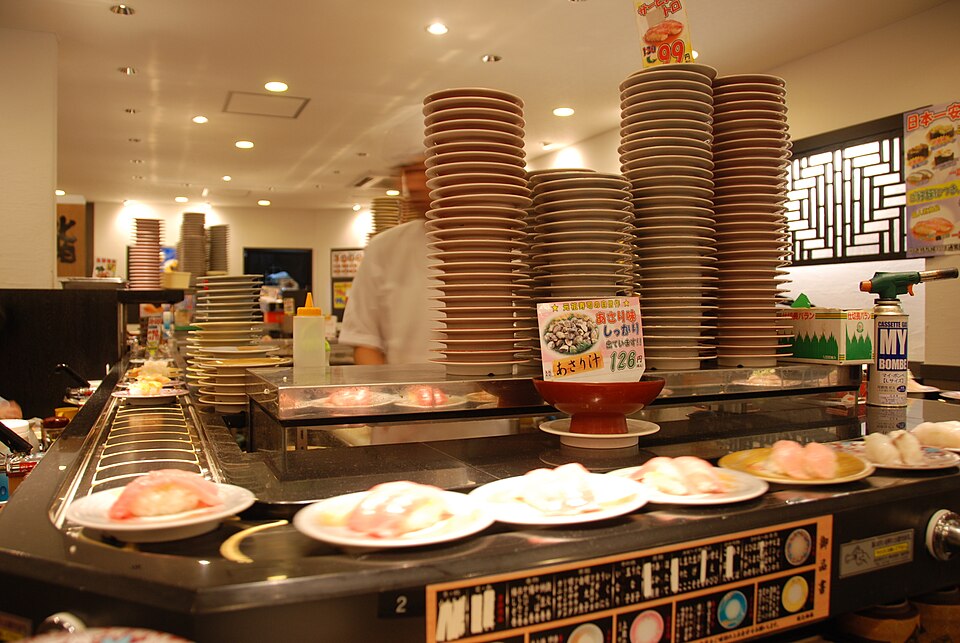
This article compares allergen tables, ingredient tables, and press releases published on the websites of Kura Sushi, Sushiro, Hama Sushi, and Kappa Sushi. We distinguish what they do and do not reveal about these two points. We counted products marked as “used” (使用) for pork and gelatin in the four companies’ allergen tables, and checked where and how sushi rice and soy sauce appear.
To give part of the findings first, the official pages we checked did not mention halal certification or arrangements for halal needs. These were the four companies’ allergen tables, Kura Sushi’s ingredient table, Sushiro’s and Hama Sushi’s FAQs, and Kura Sushi’s and Hama Sushi’s contact pages. Even so, official materials can provide information to help you decide which products to choose and what to ask the restaurant.
What people avoid and how far they check varies. This article provides information to help you decide, rather than determining whether you may eat something. Product names are examples for explaining how to read the tables. Menus vary by time and restaurant. All sources were checked on October 30, 2026. For an overall guide to reading chain restaurants’ allergen tables, see How Much Can Chain Restaurants’ Published Information Tell You About Pork and Alcohol?
All four allergen tables have pork and gelatin columns, but no alcohol column
All four companies publish PDF allergen tables for individual products. Allergen labeling in restaurants is not legally required, so companies differ in what they include. However, all four included items for which labeling is recommended, and had columns for pork (豚肉) and gelatin (ゼラチン).
| Company | Table date | Number of allergens | Symbols other than “used” | Sushi rice and soy sauce rows |
|---|---|---|---|---|
| Kura Sushi | As of October 30, 2026 | 26 | ▲ (made on the same line) | Present: sushi rice, soy sauce, ponzu, and others |
| Sushiro | Updated October 22, 2026 | 28 | ○ (shared production line at the factory) | Rows for sushi rice and gari pickled ginger; no soy sauce row |
| Hama Sushi | Updated October 14, 2026 | 28 | △ (same line at the ingredients’ manufacturing factory) | Table seasonings include seven soy sauces, ponzu, gari, and others |
| Kappa Sushi | Year-round regular items: July 2026; seasonal and promotional tables are in the same PDF | 28 | None: only ● and - | None |
The item count means the number of allergens. Kura Sushi says information on almonds, macadamia nuts, and pistachios is being prepared. For pistachios, Sushiro says it is investigating, Hama Sushi says it is preparing information, and Kappa Sushi says it is checking. All four list pork and gelatin, so the differences in nuts do not affect this article’s purpose.
None of the four has an alcohol column. Allergen labeling is intended to identify ingredients that cause allergies, and alcohol is outside its scope. Even if the table has rows for beer or Japanese sake, these are alcoholic drinks sold as products. The tables do not reveal alcoholic drinks or mirin used in sushi vinegar (寿司酢) or sauces.
Symbols other than “used” also differ. Kura Sushi, Sushiro, and Hama Sushi use a separate symbol for allergens on a shared factory production line, even when they are not used as ingredients. Kappa Sushi’s table has only “●” (present, 有り) and “-” (absent, 無し).
Products marked for pork range from 32 to 87 across the four companies
We counted products with the “used” symbol (●) in the pork column of the four allergen tables. Each listed row was counted as one product, including limited-time products and different set combinations. For Kappa Sushi, we also included the seasonal and promotional tables in the same PDF.
| Company | Products with ● for pork | Examples whose names identify pork | Examples whose names do not clearly identify pork |
|---|---|---|---|
| Kura Sushi | 32 products | Pork Kalbi (豚カルビ), Extra-Fatty Iberico Pork (イベリコ豚の大とろ), Seared Cheese Pork Kalbi (あぶりチーズ豚カルビ) | Salad (サラダ), Seafood Salad (シーフードサラダ), Special Chawanmushi (特製茶碗蒸し) |
| Sushiro | 55 products | Roast Pork Nigiri (焼豚にぎり), Seared Char Siu (炙りチャーシュー), Pork Cutlet Nigiri (とんかつにぎり), Cured Ham (生ハム) | Herring Roe (数の子), Scallop Frill with Chopped Wasabi Gunkan (帆立ひもの刻みわさび軍艦) |
| Hama Sushi | 87 products | Seared Fatty Pork (炙り豚とろ), Salted Pork Kalbi (豚塩カルビ), Seared Char Siu Nigiri (炙りチャーシュー握り), Pork and Egg Nigiri (ポーク玉子握り) | Shrimp Rare Steak (えびレアステーキ), Salmon Rare Steak (サーモンレアステーキ), Savory Dashi Takoyaki (旨だしたこ焼き) |
| Kappa Sushi | 34 products | Pork Tongue with Salt Sauce (豚タン塩ダレ), Char Siu and Menma Snack (おつまみチャーシュー&メンマ) | Large Fried Takoyaki with a Soft Center (とろ〜り大玉揚げたこ焼き), Menma Snack (おつまみメンマ) |
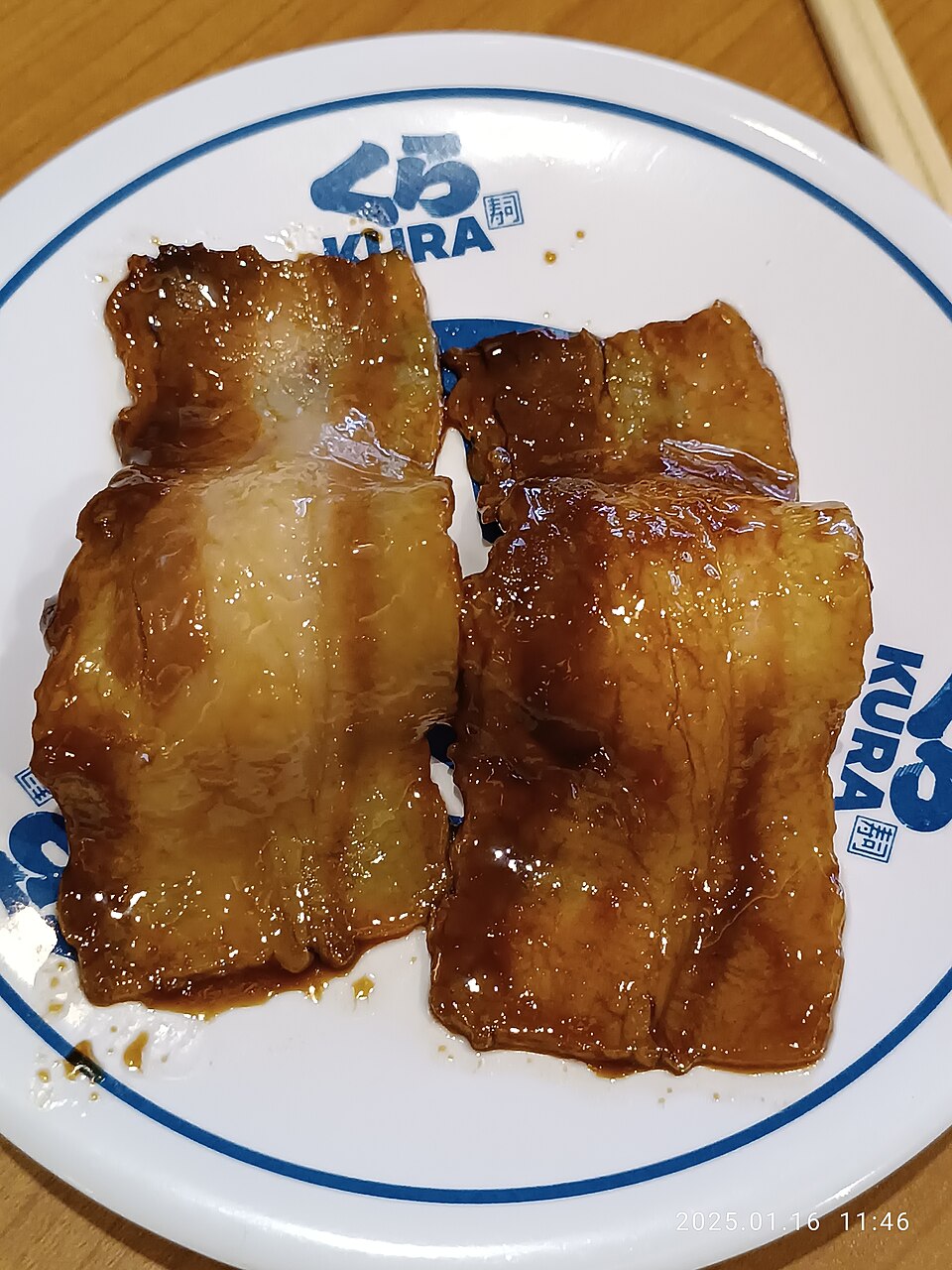
All four companies serve sushi topped with pork itself. Products marked for pork include sushi with hamburger steak (ハンバーグ), cured ham (生ハム), or char siu (チャーシュー), as well as side dishes such as ramen, chawanmushi savory egg custard (茶碗蒸し), croquettes, and takoyaki.
Pay attention to products whose names mention neither pork nor any meat. Sushiro’s “Herring Roe” (数の子), Hama Sushi’s “Shrimp Rare Steak” (えびレアステーキ), and Kura Sushi’s “Salad” (サラダ) all had “●” in the pork column. We visually checked the PDF tables to confirm these were not reading errors. The tables do not reveal whether pork is in the topping, sauce, or seasoning liquid. Choosing only by the fish topping’s name can cause you to overlook such products.
The numbers rise further if shared-line symbols are included. Products with a symbol indicating a shared production line in the pork column numbered 83 at Kura Sushi, 155 at Sushiro, and 292 at Hama Sushi. This symbol does not mean pork is used as an ingredient. People differ on how far to avoid such products.
Products without a symbol also need care. Allergen labeling is based on proteins in ingredients. Pork-derived ingredients with almost no remaining protein, such as lard (ラード), may not appear in the pork column. A usage symbol indicates that pork is used, but the absence of a symbol does not establish that no pork-derived ingredients are used at all. We explain this in detail in the chain restaurant article mentioned earlier.
Gelatin symbols appear on gunkan sushi and udon as well as desserts
Products with “●” in the gelatin column numbered 45 at Kura Sushi, 17 at Sushiro, 40 at Hama Sushi, and 33 at Kappa Sushi.
Alongside desserts such as custard pudding, jelly, and cake, sushi and side dishes also have symbols. At Kura Sushi, “Japanese Omelet” (たまご焼き), “Cod and Mayo Gunkan” (たらマヨ軍艦), “Magutaku Gunkan” (まぐたく軍艦), and udon dishes such as “Kitsune Udon” (きつねうどん) and “Natural Dashi Udon” (天然だしうどん) had gelatin symbols. Among the seasoning rows in the same table, “Kura Dashi” (くら出汁) also has a gelatin symbol.
Gelatin symbols also appeared on Sushiro’s “Pork Cutlet Nigiri” (とんかつにぎり) and “Pork Bone Soy Sauce Ramen” (豚骨醤油ラーメン); Hama Sushi’s “Hamburger Steak” (ハンバーグ), “Three Kinds of Salad Gunkan” (サラダ軍艦三種盛り), and nigiri topped with fried foods and tartar sauce; and Kappa Sushi’s “Salad Gunkan” (サラダ軍艦) and “Teriyaki Hamburger Steak” (てりやきハンバーグ).
None of the tables states whether gelatin is made from cattle, pigs, or fish. Some products with gelatin symbols have no symbol in the pork column. To find out the source animal, give the company the product name and ask. For what “gelatin” (ゼラチン) on an ingredient list tells you, see Are Emulsifiers and Gelatin Halal? What the “Origin” (由来) Wording on Ingredient Lists Tells You.
Even where sushi rice and soy sauce have rows, the tables do not describe vinegar or alcoholic drinks
Even if you choose a fish topping, you eat the sushi rice and soy sauce with it in nigiri or gunkan sushi. Here is how the four tables treat sushi rice and soy sauce.
Kura Sushi has rows for sushi rice, soy sauce, ponzu, sweet sauce, wasabi, and other items at the end of its allergen table. The “Shari (Seasoned Vinegar)” (シャリ(合わせ酢)) row says “Not applicable” (該当なし), meaning none of the 26 allergens is used. The “Soy Sauce” (しょうゆ) row has symbols for wheat and soybeans. The ingredient table lists Japanese-grown rice as the main ingredient of the sushi rice. In a press release dated August 9, 2018, the company announced that it made the seasoned vinegar for sushi rice at its own center and delivered it to restaurants. It also announced that, from July 27, 2018, it had changed to “Healthy Black Vinegar Sushi Rice” (健康黒酢のシャリ), using three types of black vinegar. Published materials do not establish whether it is still made the same way. None states whether the seasoned vinegar uses mirin, alcoholic drinks, or alcohol.
Sushiro’s allergen table has a “Sushi Rice” (しゃり) row with no symbols. The “Gari” (ガリ) row has only shared-production-line symbols. There was no soy sauce row. During promotions, Sushiro sometimes serves all products with “Red Sushi Rice” (赤しゃり). Its August 31, 2026 press release says products at all restaurants would be served with red sushi rice from September 2, using red vinegar made with aged sake lees (熟成酒粕). If you avoid ingredients made using sake lees (酒粕), checking whether a red sushi rice promotion is running before entering can make your decision easier.
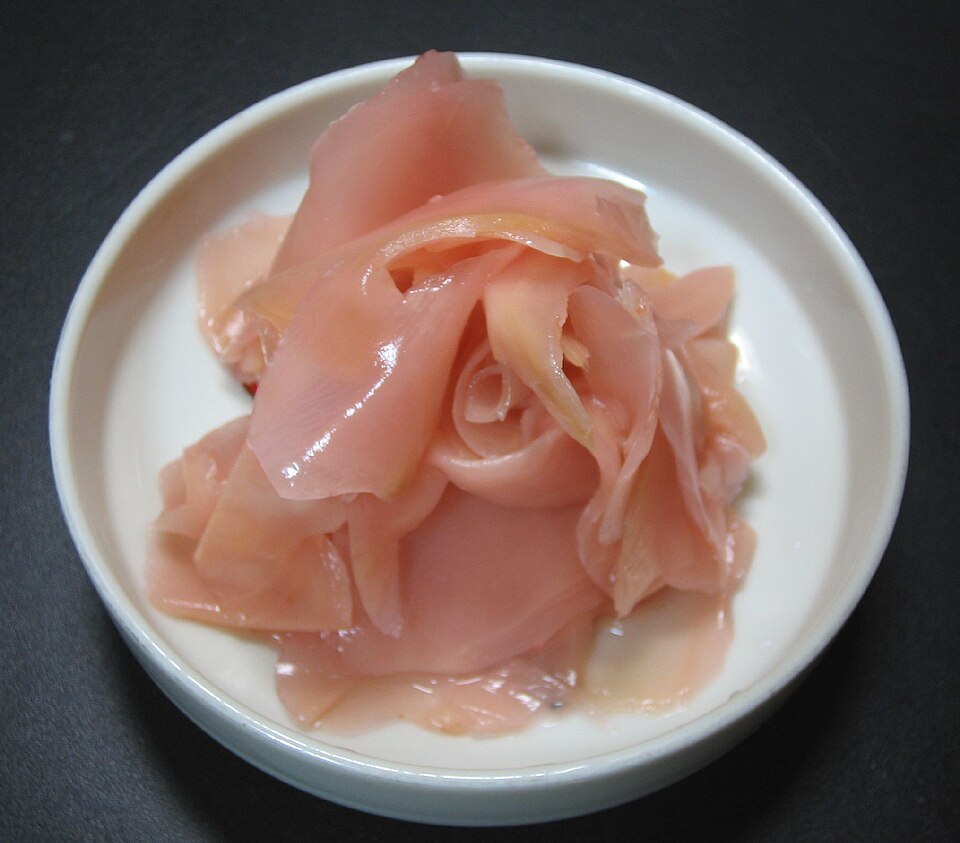
Hama Sushi’s allergen table has a “Table Seasonings” (卓上調味料) section. It lists seven soy sauces, including sachets, such as Special Dashi Soy Sauce (特製だし醤油), Kanto-Style Dark Soy Sauce (関東風濃口醤油), and Reduced-Salt Soy Sauce (減塩醤油), alongside ponzu (ぽん酢), sweet sauce (甘ダレ), gari (がり), and wasabi sachets. The soy sauces, ponzu, and sweet sauce have wheat and soybean symbols; gari has none. We did not find a sushi rice row.
Kappa Sushi’s table has no sushi rice or soy sauce rows. Its notes say the allergy information excludes products customers select, such as sauces and dressings, and seasonings used to taste, such as soy sauce and Tabasco.
For all four companies, “Not applicable” or no symbols for sushi rice only tells you that the listed allergens are not used. Alcohol is outside the tables’ scope, so this does not show that sushi vinegar contains no mirin, alcoholic drinks, or alcohol. Soy sauce can contain alcohol naturally produced by fermentation or added afterward to maintain quality. The allergen tables reveal neither. We explain how to check alcohol in vinegar, soy sauce, and mirin in Are Soy Sauce, Mirin, Miso, and Vinegar Halal? Checking the Ingredients of Japanese Seasonings for Alcohol.
In 2021, the company behind Sushiro wrote that “many menu items use halal ingredients”
Of the four companies, we found official material discussing halal only from FOOD & LIFE COMPANIES, which operates Sushiro.
In its September 15, 2021 news release, the company announced about 120 menu items for the “Sushiro Dubai Expo Restaurant” (スシロードバイ万博店) at the Japan Pavilion of the Dubai Expo. According to the release, all menu items at this restaurant used halal ingredients so Muslims could dine with confidence. It says many menu items at its Japanese restaurants use halal ingredients, although some differ. During development, those ingredients and seasonings were therefore replaced with halal ingredients. The company says all menu items met local halal standards and received approval from the Dubai Expo corporation. For ramen, it says the soup was changed to chicken soup and the noodles were also replaced.
This material shows that ingredients and seasonings were replaced for the Dubai restaurant, and that Japanese restaurants’ menus included ingredients that were not halal as they stood. It does not specify which ingredients or seasonings were replaced. It does not mean Japanese restaurants use only halal ingredients: in the October 2026 Japanese allergen table, 55 products had “●” for pork.
Shared frying oil and noodle equipment: four points to ask the restaurant or company
You may also care about whether food is prepared using the same equipment as pork-containing products. All four companies discuss unintended mixing at restaurants and factories in notes at the start of their tables or in the margins.
Hama Sushi’s notes were specific. Its examples state that cooking equipment and supplies, such as knives, cutting boards, and gloves, as well as tableware and frying oil are shared; udon, soba, and ramen noodles are cooked using common equipment; and all drinks use a shared dispensing nozzle. Since frying oil is stated to be shared, choose Hama Sushi’s fried foods on the understanding that they are fried in the same oil as other fried foods.
Kura Sushi says other ingredients may unintentionally mix with or adhere to food because its processing centers and restaurants handle many products. Its ingredient table lists “soybean oil and other oils” (大豆油等) as the main ingredients of tempura frying oil. This tells you what oil is used, but not whether it is kept separate from the oil for fried foods using pork.
Sushiro says allergens not listed in the table may unintentionally enter food during cooking or plating at restaurants. Kappa Sushi says allergenic ingredients may adhere to or mix with food because, for example, manufacturing factories and restaurants share production lines and kitchen equipment with other products.
If you are unsure whether to order ramen, it may help to know that all four had ramen marked for pork. For what to check in ramen soup and sauce, see Is Ramen Halal? What to Check in the Soup, Sauce, Noodles, and Toppings.
For questions the tables and notes above do not answer, ask the company’s customer service team or the restaurant. Focusing your questions makes it easier for them to investigate.
Does the seasoned vinegar (sushi vinegar) in the sushi rice contain mirin, alcoholic drinks, or alcohol? (シャリの合わせ酢(寿司酢)に、みりんや酒、アルコールは入っていますか。)
Has alcohol been added to the soy sauce on the table? (テーブルの醤油に、アルコールは加えてありますか。)
Is the frying oil the same as that used for fried foods containing pork? (揚げ物の油は、豚肉を使う揚げ物と同じ油ですか。)
Which animal is the gelatin in products that use it made from? (ゼラチンを使っている商品のゼラチンは、何の動物から作られたものですか。)
Contact methods differ by company. Kura Sushi accepts inquiries by phone, not through a form. It also says replies may take five to seven days. Hama Sushi accepts both toll-free calls and web forms. If your travel dates are set, asking early can give you peace of mind.
At a restaurant, serving staff may not be able to answer immediately. Being told clearly that something is unknown can also help you decide. Example questions in Japanese, English, and Indonesian appear in “Is It Halal?” Is Not Enough: How to Ask When Checking at a Restaurant.
The four tables have dates ranging from July to October 30, 2026. As menus change, products marked for pork or gelatin change too. Before visiting, open the table current on that day. Even checking just the pork and gelatin columns can help narrow down your choices.
Quotes from Japanese sources in this article are our own translations.
Sources
Primary sources
- Kura Corporation, “Kura Sushi Allergen and Calorie Information” (くら寿司アレルゲン・カロリー情報) (in Japanese), as of October 30, 2026, checked on October 30, 2026
https://www.kurasushi.co.jp/common/pdf/kura_allergen.pdf - Kura Corporation, “Ingredients and Countries of Origin” (原材料・原産地情報) (in Japanese), as of October 30, 2026 (Other Items: sushi rice and tempura frying oil), checked on October 30, 2026
https://www.kurasushi.co.jp/common/pdf/kura_rawmaterial.pdf - Kura Corporation, “Reborn as ‘Healthy Black Vinegar Sushi Rice’ for Even More Flavor!! The New ‘Aged Gekitoro’ Arrives!” (“健康黒酢のシャリ”に生まれ変わり、さらに旨みが際立つ!! 新生「熟成 激とろ」登場!) (in Japanese), August 9, 2018, Kyodo News PR Wire, checked on October 30, 2026
https://kyodonewsprwire.jp/release/201808096824 - Kura Corporation, “Contact Us” (お問い合わせ) (in Japanese), checked on October 30, 2026
https://www.kurasushi.co.jp/contact/ - Akindo Sushiro, “Allergy Information” (アレルギー情報) (in Japanese), updated October 22, 2026, checked on October 30, 2026
https://www3.akindo-sushiro.co.jp/pdf/menu/allergy.pdf - Akindo Sushiro, “Standout Flavor! Carefully Selected Toppings × Red Sushi Rice Promotion!” (旨さ際立つ!厳選したこだわりのネタ×赤しゃりフェア開催!) (in Japanese), August 31, 2026, FOOD & LIFE COMPANIES’ page on PR TIMES, checked on October 30, 2026
https://prtimes.jp/main/html/rd/p/000000834.000049164.html - FOOD & LIFE COMPANIES, “About 120 Menu Items Announced for the Limited-Time ‘Sushiro Dubai Expo Restaurant’ at the Dubai Expo Opening October 1” (10月1日に開幕を迎える「ドバイ国際博覧会」期間限定「スシロードバイ万博店」、メニュー約120点を公開) (in Japanese), September 15, 2021, checked on October 30, 2026
https://food-and-life.co.jp/wp-content/uploads/2021/09/news_20210915-1.pdf - Hama Sushi, “Allergen List (Dine-In)” (アレルゲン一覧表(店内)) (in Japanese), updated October 14, 2026, checked on October 30, 2026
https://images.zensho.co.jp/materials/hama-sushi/allergen/allergen.pdf - Hama Sushi, “Contact Us” (お問い合わせ) (in Japanese), checked on October 30, 2026
https://www.hama-sushi.co.jp/contact/ - Kappa-Create, “Allergen Information by Menu Item” (メニュー別アレルゲン情報) (in Japanese), year-round regular items: July 2026, and other tables, checked on October 30, 2026
https://www.kappasushi.jp/master_data/pdf/info_allergen.pdf
Related articles
RELATED
For visitors
What Is Halal Food? Three Requirements, Dishes by Country, and Five Changes to Japanese Cooking
For visitors
Are Shortening and Margarine Halal? The Share of Pork Fat in Their Raw Materials and Three Ways Fats Are Listed
For visitors
Is Cheese Halal? Four Types of Rennet (Milk-Clotting Enzyme), and Why It Is Not Listed as an Ingredient
For visitors