
What Is Halal Food? Three Requirements, Dishes by Country, and Five Changes to Japanese Cooking
Category: For visitors
Halal food uses ingredients and preparation methods that follow Islamic rules
What is halal food, or a halal dish? Put simply, it is food made with ingredients permitted under Islamic rules and prepared without mixing with anything prohibited. It is also called halal cuisine or halal meals. Halal is Arabic for “permitted” or “lawful.” Its opposite, something prohibited, is called haram.
Halal food is not a particular cuisine. Kebabs, curry, and Japanese food can all be halal if their ingredients and preparation follow the rules. If they do not, a dish with the same name is not halal. The Japan Tourism Agency’s guide for businesses, published in April 2024, gives examples of replacing ingredients in tempura rice bowls (天丼), curry (カレー), pan-fried gyoza (焼き餃子), peperoncino pasta (ペペロンチーノ), and miso-simmered udon (味噌煮込みうどん) to make dishes Muslims can eat.
Another point to understand first is that halal rules differ by country and region. According to the Ministry of Agriculture, Forestry and Fisheries (MAFF), halal requirements are religious rules rather than laws. Malaysia and Indonesia have codified food halal systems, while individual religious bodies make their own judgments in the Middle East. How strictly people observe them also varies. We discuss the meaning of the word and differences in individual practice in What Is Halal? It Means “Permitted”: The Basics of Halal Food.
This article explains the requirements for a dish to be halal, using materials from MAFF, the Japan Tourism Agency, and the Japan National Tourism Organization (JNTO), along with introductions from national tourism bodies. We checked all the sources on November 1, 2026.
Three requirements for halal food
MAFF’s handbook on halal and kosher, published in March 2026, divides the “main halal requirements” into three groups. Applied to cooking, they are as follows.
| Requirement | The handbook’s explanation | What to watch for when cooking |
|---|---|---|
| Exclude prohibited ingredients | No ingredients from pork, alcohol, blood, predatory animals, or similar sources | Pork extract (豚のエキス), lard (ラード), gelatin (ゼラチン), emulsifiers (乳化剤), mirin (みりん), cooking sake (料理酒) |
| Slaughter according to the rules | Meat processed by slaughter methods that follow Islamic law | Beef, chicken, lamb and mutton, meat extracts, and bouillon |
| Handle separately | Avoid contact with non-halal items during production, transport, and storage | Cooking utensils, frying oil, storage areas, tableware |
Exclude prohibited ingredients
Pork restrictions cover products made from pigs as well as the meat itself. The Japan Tourism Agency’s guide lists bacon (ベーコン), sausages (ソーセージ), pork extract, pork bone soup (豚骨スープ), lard, offal (モツ), and emulsifiers, shortening (ショートニング), gelatin, and collagen (コラーゲン) in seasonings and additives as examples to check.
The guide explains that many Muslims do not consume alcoholic drinks or ingredients, including mirin. It also says some avoid even traces of alcohol in soy sauce and similar foods, while opinions differ on whether such traces should be avoided. MAFF’s materials likewise say individual judgments differ on very small amounts of alcohol used as an additive. For a list, see A List of Foods That Are Not Halal: Pork, Alcohol, and Easy-to-Miss Items in Japanese Food. For reading additive labels, see Are Emulsifiers and Gelatin Halal? What the “Origin” (由来) Wording on Ingredient Lists Tells You.
Slaughter according to the rules
Even meat other than pork, such as beef, chicken, lamb, or mutton, is avoided if it was not slaughtered in the Islamic way. MAFF’s materials explain rules such as invoking Allah’s name before slaughter. Extracts and additives made from the meat are treated the same way as the meat itself.
According to the Japan Tourism Agency’s guide, much chicken from countries such as Brazil and beef from countries such as Australia is halal-certified. Some halal chicken and beef are also produced in Japan. For halal-certified meat processing plants in Japan, see What Is Halal Wagyu? Wagyu Rules, Halal-Certified Meat Processing Plants, and What to Check When You Eat It.
Handle separately
Even with suitable ingredients, contact with pork or alcohol during preparation means the food loses its halal compliance. The handbook calls this contamination, or cross-contamination, and says it can occur during production, cooking, storage, or transport. Kitchen examples include frying tempura in oil previously used for pork cutlets or reusing a knife or cutting board after cutting pork without cleaning it.
However, views on how far to separate things vary. The Japan Tourism Agency’s guide says many people consider utensils used for dishes not intended for Muslims acceptable if properly washed, while others find sharing them uncomfortable. Some are concerned about cooking and storage areas as well as utensils.
Ingredients you can use as they are, and ingredients that need checking
Applying the three requirements to ingredients separates those usable as they are from those that need checking product by product. The Japan Halal Business Association gives vegetables, fruit, grains such as rice and wheat, beans, seafood, seaweed, milk, and eggs as examples of halal foods. JNTO, however, warns travelers that although Japanese ingredients such as rice, seafood, and tofu may seem suitable for halal food, cooking sake and mirin are used in many Japanese dishes.
| Ingredient | How it is treated | What to check |
|---|---|---|
| Vegetables, fruit, rice, wheat, beans | Usable as they are | For processed products, seasoning and frying oil |
| Seafood, seaweed | Usable as they are | Some schools of thought avoid certain seafood |
| Eggs, milk | Usable as they are | For cheese, the origin of the milk-clotting enzyme |
| Beef, chicken, lamb and mutton | Depends on the slaughter method | Whether there is halal certification |
| Ham (ハム), bacon (ベーコン), sausages (ソーセージ) | Some products use pork | The meat used and how it was slaughtered |
| Dashi stock (だし), soup base (スープの素), bouillon (ブイヨン), curry roux (カレールー) | Depends on origin | Pork or beef extract (豚や牛のエキス), lard (ラード), beef fat (牛脂) |
| Soy sauce (醤油), miso (味噌), vinegar (酢), mirin (みりん), cooking sake (料理酒) | Some contain alcohol | “Alcohol” (アルコール) or “alcohol” (酒精, shusei) in the ingredient list; the type of mirin |
| Bread, sweets | Some use animal-derived ingredients | Gelatin (ゼラチン), shortening (ショートニング), fats such as butter (バター), Western liquor (洋酒) |
MAFF’s materials also note that some schools of thought avoid certain seafood. For cheese, see Is Cheese Halal? Four Types of Rennet (Milk-Clotting Enzyme), and Why It Is Not Listed as an Ingredient. For bread, see Is Bread Halal? What to Check in Shortening, Margarine, and Western Liquor. Each article explains how to read the relevant labels.
“Usable as they are” in the table refers to the ingredient on its own. Even simmered vegetables become a non-halal dish if the stock uses pork or beef extract or they are seasoned with mirin. Ingredients, seasoning, and preparation all need to be considered together.
Representative halal dishes from countries with many Muslims
Approaches to halal differ by country. According to MAFF’s handbook, products on the market in the Middle East are assumed to be halal, so certification on packaging is less important to consumers. In Southeast Asia, where Muslims and non-Muslims live alongside one another, halal and non-halal products are sold side by side, making certification checks important.
Below are dishes from countries with many Muslims, introduced as dishes from their own countries by three national tourism bodies.
| Country | Dish | Tourism body’s introduction |
|---|---|---|
| Türkiye | Kebab | A cornerstone of modern Turkish cuisine; the word means “charcoal-grilled” |
| Malaysia | Nasi lemak | Rice cooked in coconut milk, with sambal, small fish, peanuts, a boiled egg, and cucumber |
| Indonesia | Rendang | A beef dish from West Sumatra, cooked with coconut milk for about seven to eight hours; named one of the national dishes in 2018 |
Turkish kebabs
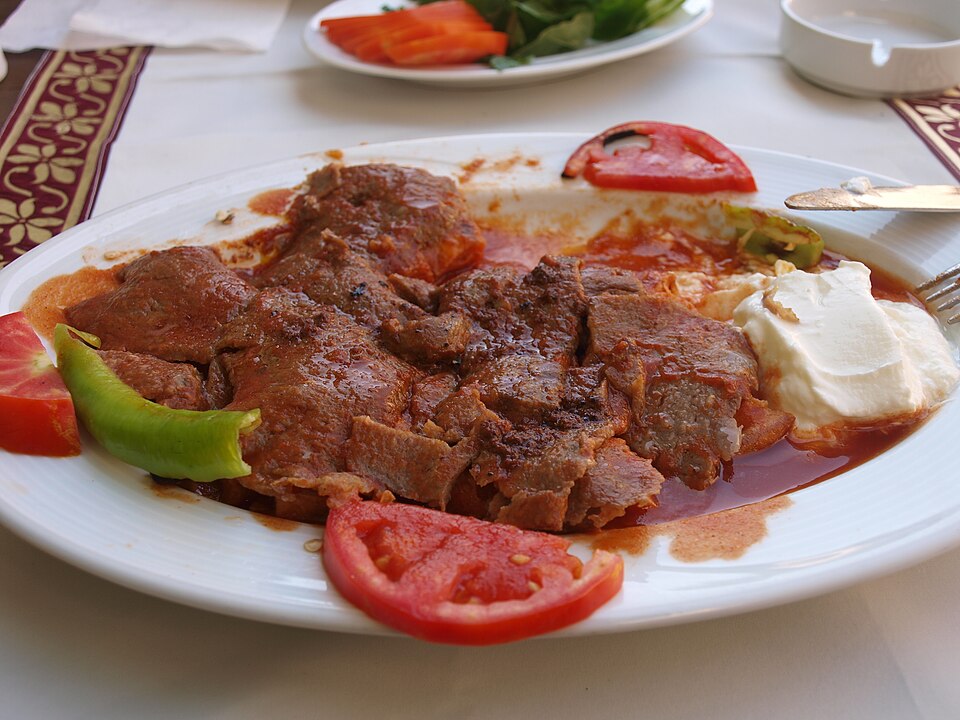
GoTürkiye, the tourism website of Türkiye Turizm Tanıtım ve Geliştirme Ajansı (Türkiye’s tourism promotion and development agency), introduces kebab as a cornerstone of modern Turkish cuisine. The word originally means “charcoal-grilled” and even covers roast chestnuts sold from street stalls in winter. Meat kebabs vary by region, including spicy Adana, milder Urfa, and dürüm wrapped in thin bread. The best-known example it lists is Iskender kebab, devised in Bursa in 1867: thinly sliced lamb topped with yogurt, tomato sauce, and butter.
Malaysian nasi lemak
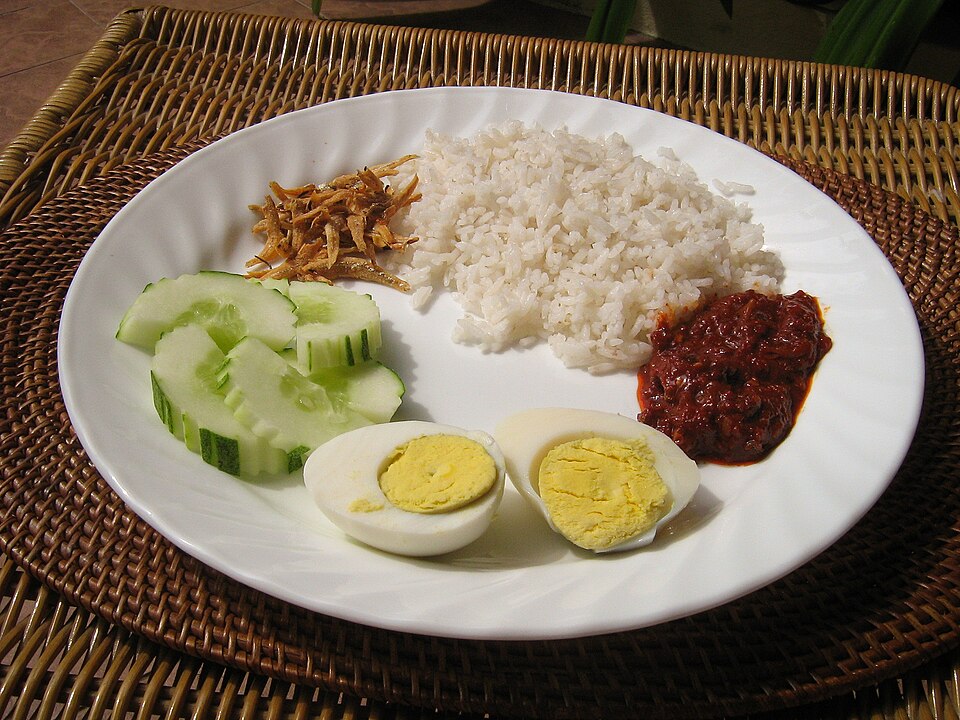
Tourism Malaysia presents nasi lemak as a distinctly Malaysian dish. The basic meal is rice cooked with coconut milk and pandan leaves, served with sambal (a spicy chili jam), small fish, peanuts, a boiled egg, and cucumber. It may also come with fried chicken, fried fish, squid, or beef rendang.
Indonesian rendang
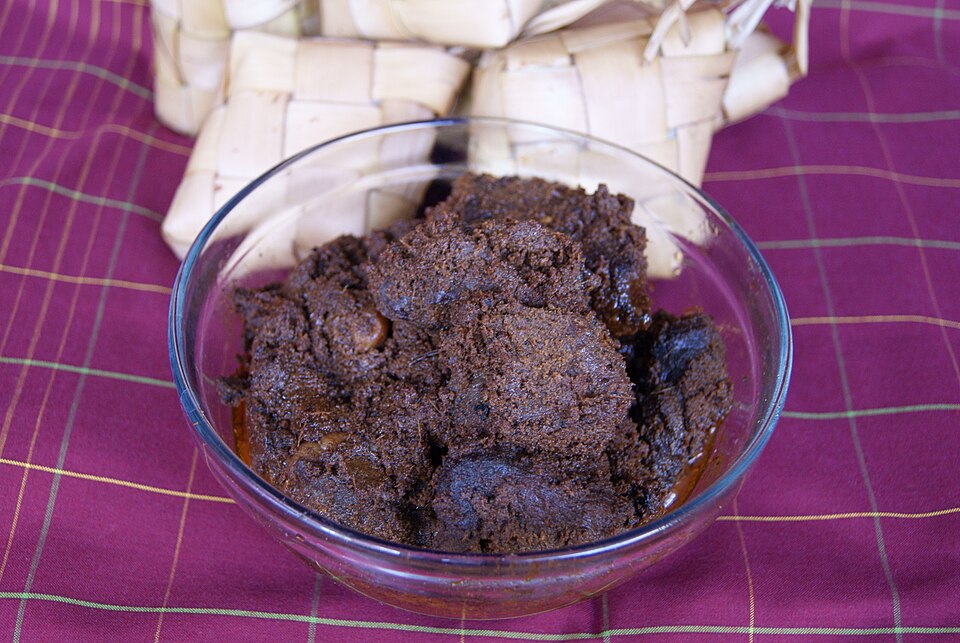
According to Indonesia’s official tourism website, the Ministry of Tourism named rendang a national dish on April 9, 2018, alongside soto, nasi goreng, sate, and gado-gado. It explains that rendang comes from West Sumatra and originally referred to the process of cooking beef until tender and dry, rather than to the name of a dish. It takes about seven to eight hours to cook with coconut milk. Chicken, fish, egg, squid, and shrimp rendang are also introduced alongside the beef version.
Eating halal food at restaurants in Japan
Even if these dishes are assumed to use halal ingredients in their home countries, a dish with the same name in Japan may not be made under the same conditions. Check each restaurant’s meat certification, sauces, and frying oils. The Japan Tourism Agency’s guide says that, provided the meat is halal, preferences between beef and chicken or between meat and fish are individual choices, with no overall difference in popularity. It also notes a tendency for Middle Eastern people to prefer seafood such as grilled or simmered fish more than Southeast Asian people do. For food during Ramadan, see What Is Iftar? The Meal After Sunset During Ramadan, Its Timing, Suhoor (Sahur), and Dishes in Different Countries.
Five changes when making Japanese dishes halal
The Japan Tourism Agency’s guide gives examples of replacing ingredients in everyday dishes to make meals Muslims can eat. The substitutions in its Muslim-oriented column are listed below.
| Dish | Usual ingredients | Ingredients for Muslim customers |
|---|---|---|
| Tempura rice bowl (天丼) | Soy sauce and mirin in the sauce | Soy sauce with no added alcohol (アルコール無添加); sugars such as sugar beet sugar (てんさい糖) |
| Curry (カレー) | Curry roux, meat | Curry roux without animal-derived ingredients (動物性原料不使用); halal-certified beef or chicken |
| Pan-fried gyoza (焼き餃子) | Wrappers, ground pork, vinegar, soy sauce | Wrappers, vinegar, and soy sauce with no added alcohol; halal-certified ground chicken |
| Miso-simmered udon (味噌煮込みうどん) | Noodles, miso, mirin, soy sauce, chicken | Noodles, miso, and soy sauce with no added alcohol; sugars such as sugar beet sugar; halal-certified chicken |
The shrimp in the tempura rice bowl and seafood stock are not replaced in the Muslim-oriented column. For peperoncino pasta, bacon is replaced with mushrooms. Across Japanese dishes such as tempura rice bowls and udon, and everyday dishes such as curry and gyoza, the changes fall into five groups.
Replace mirin and cooking sake with sugars
According to Zenkoku Mirin Kyokai (Japan’s mirin association), the alcohol content is about 14% for hon mirin (本みりん), about 14% for cooking sake, about 10% for mirin-type fermented seasoning (発酵調味料のみりんタイプ), and below 1% for mirin-style seasoning (みりん風調味料). The Japan Tourism Agency’s guide warns that mirin is classed as a mixed alcoholic beverage and replaces it with sugars such as sugar beet sugar.
Choose soy sauce, miso, and vinegar with no added alcohol
The guide replaces soy sauce, miso, and vinegar with versions without added alcohol. However, no added alcohol does not necessarily mean no alcohol at all.
Kikkoman says soy sauce produces alcohol during fermentation and has an alcohol content of roughly 2–3%. Products listing alcohol as an ingredient have alcohol added on top of that produced by fermentation. Products that do not list it still contain fermentation-produced alcohol. As explained under “Exclude prohibited ingredients,” views on this amount of alcohol differ from person to person.
Kikkoman offers “Halal Soy Sauce” (ハラールしょうゆ), certified by the Dutch body HFFIA, for commercial use. It says this product is not available at ordinary retail stores or mass retailers. For differences between seasonings, see Are Soy Sauce, Mirin, Miso, and Vinegar Halal? Checking the Ingredients of Japanese Seasonings for Alcohol.
Use halal-certified beef or chicken
Do not use pork; choose halal-certified beef or chicken. The pan-fried gyoza example replaces ground pork with halal-certified ground chicken.
Choose curry roux and soup bases without animal-derived ingredients
The guide lists lard, beef fat, and animal-based bouillon and extracts as animal ingredients in curry roux, and substitutes roux made without animal-derived ingredients. The same approach applies to ramen soup, as covered in Is Ramen Halal? What to Check in the Soup, Sauce, Noodles, and Toppings.
Check noodle and gyoza wrapper ingredients too
The guide also replaces udon noodles and gyoza wrappers with versions without added alcohol. As with seasonings, choose by checking the ingredient list.
Buying ingredients for halal food and handling utensils
The guide notes that substitute ingredients such as seasonings with no added alcohol and halal-certified meat can be bought online or at wholesale supermarkets, without using specialist wholesalers or shops. You also need to decide how to handle frying oil and utensils, which relates to the third requirement, “Handle separately.” For vinegar in sushi rice, see Is Conveyor-Belt Sushi Halal? Pork-Containing Products and Sushi Rice, Based on Official Information from Kura Sushi, Sushiro, Hama Sushi, and Kappa Sushi.
Four levels of service at restaurants labeled “halal”
“Halal” (ハラル) or “Muslim-friendly” (ムスリムフレンドリー) on a sign or menu does not always mean the same level of service.
Four levels in the Japan Tourism Agency’s guide
The guide divides food services for Muslims into four levels.
| Level | The guide’s explanation |
|---|---|
| Halal certification | Obtain third-party certification by measures such as handling only halal products, dedicating the kitchen, utensils, and tableware, and having a Muslim manage halal compliance |
| Muslim-friendly | Accommodate Muslims in part. Example: all ingredients cater to Muslims; the kitchen is shared, but utensils and tableware are dedicated; alcohol is sold |
| No pork, no alcohol (ノーポーク・ノーアルコール) | Exclude pork and pork-derived items, alcoholic drinks, and items containing alcohol |
| Information disclosure | Provide information through pictograms and the restaurant’s policy so customers can judge whether their needs can be met |
The guide says few Muslims visiting Japan require certification. It also says there is no globally unified standard for halal certification, and that there are said to be more than 300 certification bodies worldwide. JNTO likewise tells travelers that Japan has no single centralized halal certification body. We explain how to read certification logos in What Is a Halal Logo? How to Read Logos That Differ by Organization, and How to Check That One Is Genuine.
Four categories in Kyoto City’s list
The same words can also mean different things depending on who uses them. Kyoto City’s official tourism website divides restaurants for Muslims into “Halal,” “Muslim Friendly,” “Muslim Welcome,” and “Pork-free.” Here, “Muslim Friendly” means a restaurant with a special halal menu, which differs from “Muslim-friendly” in the Japan Tourism Agency’s guide.
JNTO warns that restaurants calling themselves halal-friendly do not necessarily use a dedicated halal kitchen, and that many Japanese restaurants serve alcohol. For differences between these terms, see What Does “Muslim-Friendly” Mean? How It Differs from Halal Certification, and Standards That Vary by Who Uses the Label.
Clues for finding and making halal food in Japan
Eating halal food outside the home
JNTO recommends regional restaurant guides for Muslim travelers when looking for restaurants serving halal-certified food. Its Muslim travel page links to regional guides from local governments and tourism bodies, from Hokkaido to Okinawa. We introduce the meanings of Kyoto City’s four categories and clues for Osaka in How to Find Restaurants Catering to Halal Diets in Osaka and Kyoto: The Four Categories in Kyoto City’s Official List, and Clues for Osaka.
If a restaurant is not listed or does not advertise halal services, you need to ask. The Japan Tourism Agency’s guide recommends restaurants state their policies on ingredients used and not used, certification, dedicated kitchens and utensils, and dishes catering to Muslims. These points also guide customers on what to ask. For example questions, see “Is It Halal?” Is Not Enough: How to Ask When Checking at a Restaurant.
Making halal food at home
According to JNTO, halal-certified foods available in Japan are mainly ingredients such as frozen meat and spices rather than prepared meals, and ordinary supermarkets do not stock halal products. Gyomu Super says on its website that it sells halal foods, but notes that some stores may not carry particular products.
Gyomu Super also explains that halal logos differ in standards and types by country and certification body. For how to read them when shopping, see What Is a Halal Logo? How to Read Logos That Differ by Organization, and How to Check That One Is Genuine. At home, deciding on the five changes for Japanese dishes and whether to separate utensils and storage areas lets you explain to Muslim friends or family what you used and how you prepared it.
What people avoid and how far they check differs individually. The Japan Tourism Agency’s guide likewise says customers differ on whether kitchens and utensils need to be dedicated. It emphasizes doing what you can and explaining it. When cooking for someone, use this article’s tables as a guide and ask the person before choosing ingredients.
Quotes from Japanese sources in this article are our own translations.
Sources
Primary sources
- MAFF Export and International Affairs Bureau, “Basic Information on Halal (April 2026)” (ハラールに関する基礎情報(2026年4月)) (in Japanese) (p. 10: main foods and drinks Muslims are not permitted to consume; p. 12: features of halal), checked on November 1, 2026
https://www.maff.go.jp/j/yusyutu_kokusai/kokuchi/halal.kosher/attach/pdf/index-13.pdf - Ministry of Agriculture, Forestry and Fisheries, “Handbook for Exporting Halal and Kosher Food (March 2026)” (ハラール・コーシャ食品輸出に向けたハンドブック(2026年3月)) (in Japanese) (p. 6: what halal means; p. 7: differences in perceptions by country and region; p. 8: main halal requirements and contamination), checked on November 1, 2026
https://www.maff.go.jp/j/yusyutu_kokusai/kokuchi/halal.kosher/attach/pdf/index-10.pdf - Japan Tourism Agency (counselor in charge of receiving foreign visitors), “Hospitality Guide for Vegetarian, Vegan, and Muslim Travelers” (ベジタリアン・ヴィーガン/ムスリム旅行者おもてなしガイド) (in Japanese), April 2024 (p. 6: stating what is provided; pp. 7–11: menu examples; p. 25: Islamic teachings on food; p. 30: levels of service; pp. 31–32: food services; p. 36: Q&A), checked on November 1, 2026
https://www.mlit.go.jp/kankocho/content/001740443.pdf - Japan National Tourism Organization (JNTO), “Muslim Travelers in Japan”, checked on November 1, 2026
https://www.japan.travel/en/guide/muslim-travelers/ - Japan National Tourism Organization (JNTO), “Useful Links to Regional Muslim Guides”, checked on November 1, 2026
https://www.japan.travel/en/my/muslim-guide/useful-links/ - Kyoto City Tourism Association (DMO KYOTO), Kyoto City’s official tourism website, “Finding Halal Food”, checked on November 1, 2026
https://kyoto.travel/en/muslim/finding-halal-food/ - Japan Halal Business Association, “Basic Information on Halal” (ハラル(ハラール)基礎知識) (in Japanese), checked on November 1, 2026
https://jhba.jp/halal/ - Türkiye Tourism Promotion and Development Agency, “16 Foods You Have to Try on Your Trip to Türkiye” (GoTürkiye), checked on November 1, 2026
https://goturkiye.com/blog/16-foods-you-have-to-try-on-your-trip-to-turkiye - Tourism Malaysia, “Malaysian Food: 52 Top Picks You Shouldn’t Miss”, checked on November 1, 2026
https://www.malaysia.travel/explore/malaysian-food-52-top-picks-you-shouldn-t-miss - Indonesia.travel, the Indonesian government’s official tourism website, “Rendang Minangkabau: One of the World’s Best Foods” (ルンダン・ミナンカバウ:世界のベストフードのひとつ) (in Japanese), checked on November 1, 2026
https://www.indonesia.travel/jp/ja/travel-ideas/gastronomy/rendang-minangkabau-one-of-the-world-s-best-food-s - Zenkoku Mirin Kyokai (Japan’s mirin association), “Facts About Hon Mirin” (本みりんの知識) (in Japanese), checked on November 1, 2026
https://www.honmirin.org/knowledge/ - Kikkoman, “Does Soy Sauce Contain Alcohol?” (しょうゆにはアルコールが含まれているのですか) (in Japanese), checked on November 1, 2026
https://customer.kikkoman.co.jp/hc/ja/articles/13771731674137 - Kikkoman, “Halal Soy Sauce” (ハラールしょうゆ) (in Japanese) (commercial use), checked on November 1, 2026
https://www.kikkoman.co.jp/gyoumuyou/products/soysauce/post0002/ - Gyomu Super, “What Is Halal?” (ハラールってナニ?) (in Japanese), checked on November 1, 2026
https://www.gyomusuper.jp/topics/whats_halal/
Related articles
RELATED
For visitors
Is Conveyor-Belt Sushi Halal? Pork-Containing Products and Sushi Rice, Based on Official Information from Kura Sushi, Sushiro, Hama Sushi, and Kappa Sushi
For visitors
Are Shortening and Margarine Halal? The Share of Pork Fat in Their Raw Materials and Three Ways Fats Are Listed
For visitors
Is Cheese Halal? Four Types of Rennet (Milk-Clotting Enzyme), and Why It Is Not Listed as an Ingredient
For visitors